The Devil’s Triangle: Where Pirate Ships Vanished
The Captain
Commanding Officer
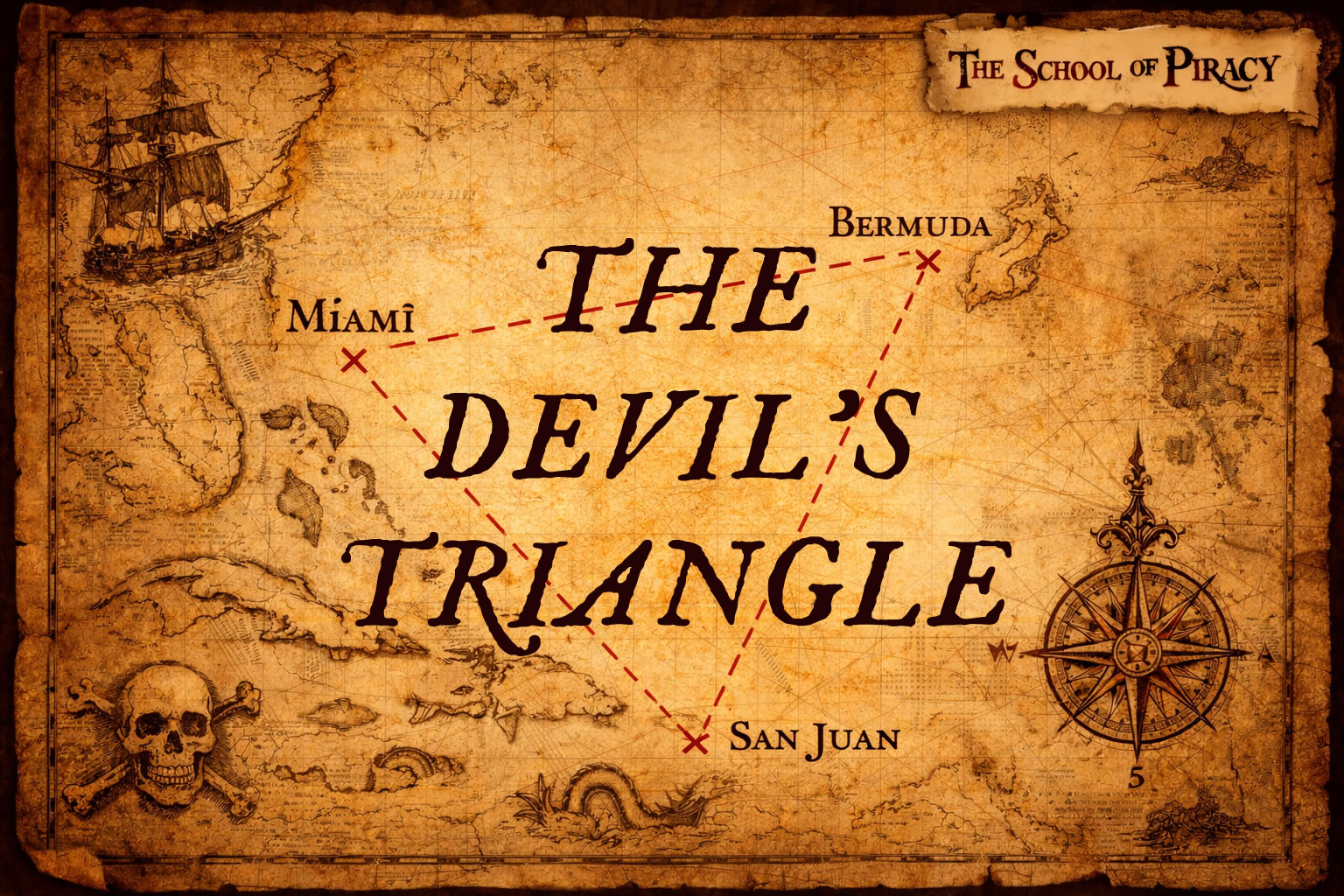
The ocean has always been a stage for legends. Few places capture the imagination like the Bermuda Triangle, often called the Devil’s Triangle. Long before modern aviation mysteries and sensational headlines, sailors and pirates were already whispering about this strange region of the Atlantic. For those who lived by the sea during the age of wooden ships and black flags, these waters carried a reputation that was both feared and respected.
The region roughly forms a triangle between Miami, Bermuda, and San Juan. Today it is one of the busiest maritime corridors in the world. But during the seventeenth and eighteenth centuries, when the golden age of piracy ruled the Caribbean, this same stretch of ocean was viewed as unpredictable and dangerous. Pirates hunted merchant vessels across the Atlantic trade routes, targeting Spanish treasure fleets and heavily loaded cargo ships. Yet even the most ruthless captains understood that chasing prey too deep into the Devil’s Triangle could be a gamble with fate.
Part of the danger came from the ocean itself. The powerful Gulf Stream runs directly through the region, moving like a vast river within the sea. For sailing ships, this current could push vessels far off course without warning. Wreckage from a disaster could vanish within hours, carried north by the relentless flow. To sailors in the age before satellites and advanced navigation, such disappearances felt supernatural.
Then there were the storms. Hurricanes have always stalked the Atlantic, and many form or intensify near the waters surrounding the triangle. A calm horizon could turn into a violent storm in a matter of hours. Wooden ships with tall masts and heavy sails were especially vulnerable. Entire crews could be lost in a single night, leaving no witnesses behind.
But nature alone does not explain why the region became so deeply woven into pirate legend. The waters around Bermuda were—and still are—filled with dangerous coral reefs. These reefs lie just beneath the surface, invisible in rough seas or darkness. Hundreds of ships have wrecked there over the centuries. For pirates, this presented a strange combination of threat and opportunity.
Some pirate crews learned the narrow passages through these reefs. With this knowledge, they could use the environment to their advantage. A merchant ship unfamiliar with the waters might run aground, becoming trapped and helpless. Pirates could then strike, capturing cargo with minimal resistance. It was a brutal but effective tactic.
Even so, pirates were notoriously superstitious sailors. Many believed the Devil’s Triangle possessed strange forces that could not be explained. Stories circulated of fog banks appearing from nowhere and swallowing ships whole. Lantern lights seen through the mist would suddenly vanish. Compasses would spin or drift off true direction, leaving navigators unsure of their position.
One popular legend among seafarers told of a pirate captain who chased a Spanish merchant ship into a dense fog deep inside the triangle. The pirates followed the fading lantern of their prey until the mist surrounded them completely. When the fog lifted hours later, the merchant ship had disappeared without a trace. No wreckage. No survivors. Just empty sea. Whether true or exaggerated, such stories spread quickly among sailors and reinforced the belief that the region held secrets beneath its waves.
Other tales described strange storms where the sky turned unnatural colors and lightning ripped across the clouds in jagged flashes. Crews claimed the sea could rise in towering walls, then fall into sudden calm as if the storm had never existed. Afterward, navigators sometimes found themselves far from where their charts suggested they should be.
Over time, the accumulation of shipwrecks and unexplained events gave the Devil’s Triangle a powerful reputation. Sailors crossing the region often performed small rituals before entering its waters. Some tossed coins into the sea. Others poured rum overboard as an offering to calm the spirits of the ocean. These traditions reflected the deep respect and fear mariners held for forces they could not control.
Eventually the golden age of piracy faded as naval patrols increased and global trade evolved. Yet the legends remained. Centuries later, when ships and aircraft began disappearing in the same region, people quickly connected the events to the old pirate stories. The myth of the Devil’s Triangle had already been written into maritime folklore.
Today scientists explain most incidents in the region through natural causes: storms, navigation errors, strong currents, and the heavy traffic passing through the area. Yet the stories continue to capture our imagination. Beneath the waters between Florida, Bermuda, and Puerto Rico lie the remains of countless ships—merchant vessels, naval craft, and perhaps even pirate ships that chased treasure too far.
The sea rarely reveals everything it hides. And somewhere in the depths of the Bermuda Triangle, the legends of pirates, storms, and vanished ships still drift silently beneath the waves.